Trusted by sailors since 1978 – available in print & eBook
Norway Why, How and Where
Why
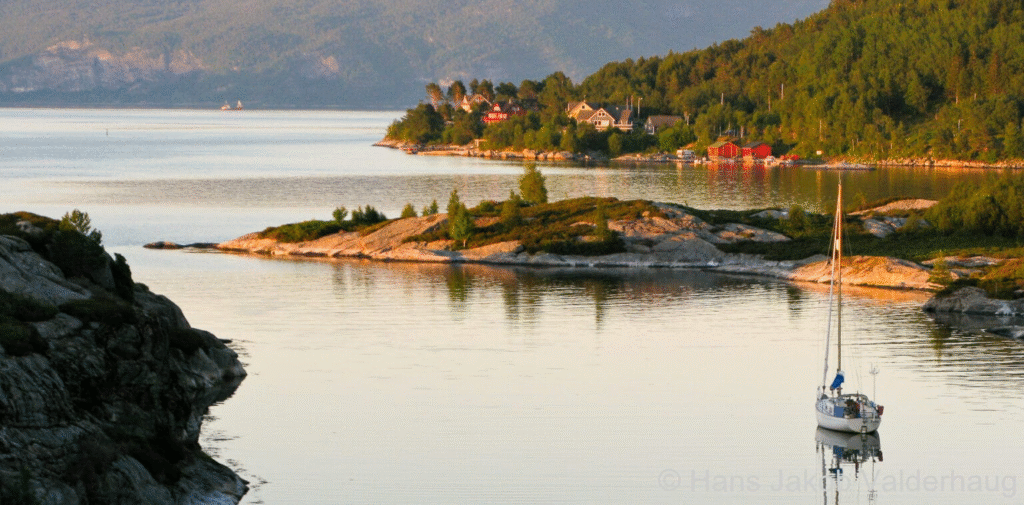
If you are looking for dramatic scenery, sheltered waters, and safe harbours, the Norwegian coast is hard to beat. Away from the more densely populated areas in the south, it is often easy to find a secure anchorage in beautiful surroundings, entirely to yourself.
When you do choose to visit a town or village, you will almost always receive a warm welcome. Norwegians are generally curious about visiting sailors and keen to help make your stay enjoyable.
Stunning landscapes, protected waters, reliable harbours, quiet anchorages, and friendly people—there is little more a cruising sailor could ask for.
How
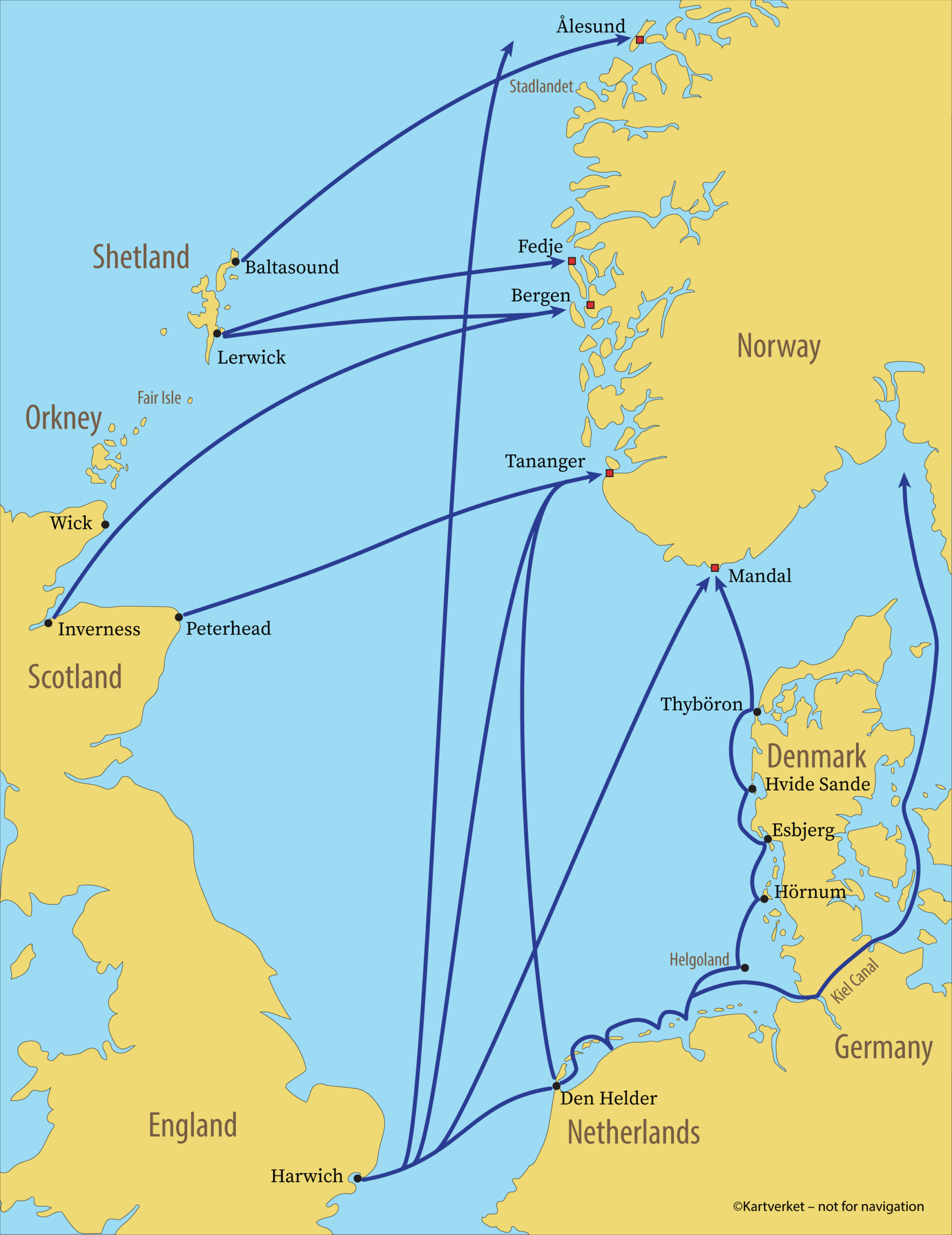
The six main choices of route we discuss below are based on departure points within the UK; however, they also provide useful information if you are coming from other places in Europe.
From England Direct
From Harwich to Tananger (Volume 2) – which is a good place to make landfall if heading north on the Norwegian coast – is about 400nm. Nearby Skudeneshaven (not an approved Port of Entry) and Stavanger are other excellent landfalls.
It is also possible to make a direct 1,000nm passage to Lofoten (Volume 4), bypassing the northeast winds common along the west Norwegian coast in early summer. The great advantave to this route is that there is plenty of sea room all the way and strong winds, which you are likely to encounter on a 1,000nm passage, will hopefully be on the quarter or, at worst, on the beam.
From Harwich to Mandal (Volume 2), which is a good place to make landfall if heading to the Norwegian southeast coast, is about 400nm. Nearby Farsund and Kristiansand also make good landfalls.
From Scotland Direct
From Peterhead to Tananger (Volume 2) is about 250nm. For those on the east coast of England, the distance from Harwich to Peterhead is about 350nm, so stopping in Peterhead adds about 200nm onto the actual distance traveled. For those coming from the west coast of England or Scotland, the passage from Inverness to Bergen (Volume 2) is about 350nm and could be a good choice after a transit of the Caledonian Canal. The greatest advantage of this route is that even a northwest wind will be well abaft the beam.
From Shetland Direct
From Lerwick to Fedje (Volume 3) is only about 180nm. From Lerwick to Marstein Lighthouse in the south approaches to Bergen (Volume 2), 42nm south of Fedje, is only about 190nm.
From Baltasund to Ålesund (Volume 3), which is an all-weather landfall north of notorious Stattlandet, is only about 230nm.
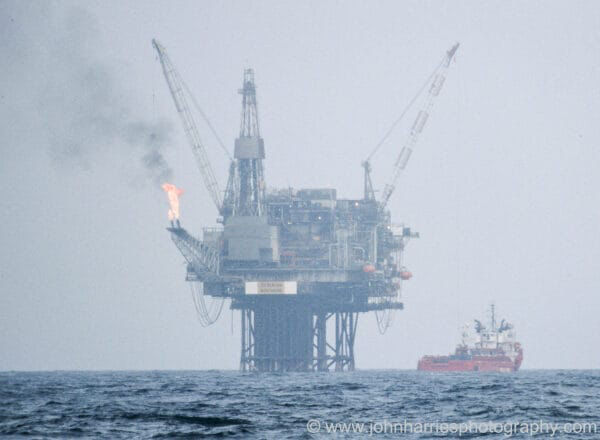
Shetland is not much out of the way on a route from the west UK, but may be an unwarranted detour from the east UK. Orkney and Fair Isle provide good intermediate stops but in waters which are strongly tidal and truly nasty in bad weather. Nonetheless, the north Scottish islands do make an interesting destination in their own right and provide good provisioning at UK prices.
Via The Netherlands
From Harwich to Tananger (Volume 2) via Den Helder is only 500nm, so the detour adds only 60nm to the whole trip but takes 80nm off the long passage, Den Helder to Tananger being 360nm. The disadvantage is that a northwest wind leaves you close-hauled at best, and possibly unable to lay the course at all, but there is still plenty of sea room and you can always bear away and run for shelter behind the Skaw. Another challenge of this route are the many offshore windfarms and busy shipping lanes on the way north.
Via The Baltic
It is possible to reach Norway by the Dutch and German coasts, the Kiel Canal and the Baltic, without ever having to be at sea in the dark. This is a good route if you dislike long passages and have plenty of time, but it’s a long way around.
Via Helgoland and the Danish West Coast
While this route requires a watchful eye on the weather, it does provide an interesting alternative to the congested SW Baltic.
From Helgoland it is possible to daysail to Thyborön with stoos at Hörnum (Sylt, N Frisian Islands), Esbjerg and Hvide Sande. The long approaches to Hörnum and Esbjerg mean that you may want to spend a day or two extra in these places.
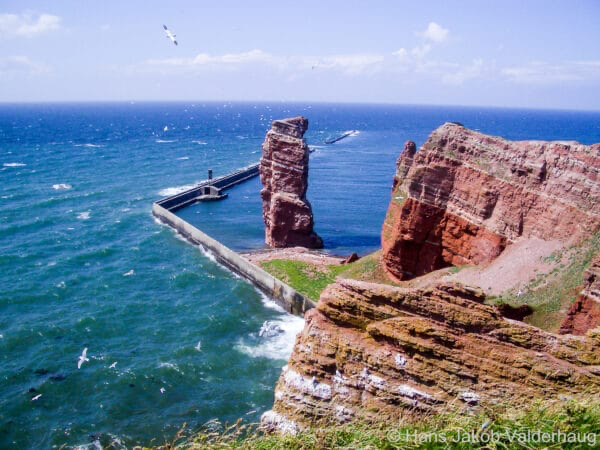
Apart from Esbjerg, all harbours on this coast are unapproachable in strong onshore winds, and even Esbjerg should only be approached on a flood tide in these conditions.
On the passage north from Esbjerg, pass through the well-buoyed Slugen, inside the large windmill farm on Horns Rev. On the passage north of Slugen, pass through Nordmands Dyb, which is lighted.
From Thyborön, a direct crossing of the Skagerak to Mandal (Volume 2) on the Norwegian S coast is about 80nm. Hanstholmen and Hirtshals offer useful boltholes on the Danish NW coast; departure from either will shorten the crossing to Norway to approximately 60nm. In unfavourable weather conditions a passage east from Thyborön through Limfjorden offers a scenic and tranquil alternative to bashing about in the North Sea.
Where
The Norwegian coast can be roughly divided into three areas by scenery, climate and sailing conditions. Below is a brief introduction to these three areas to help you plan your cruise.
For more detailed information on the characteristics of various sections of the coast and for landfall harbours in each of these areas, please see the Introduction to each of the Harbours and Anchorages chapters in Volumes 2,3,4 and 5.
From the Swedish border to the Russian border it is about 1,300nm; if you add fjords and bays it’s about 15,600nm; if you add islands its about 54,500nm. A lot of coastline in other words!
The Swedish Border to Tananger (Volume 1)
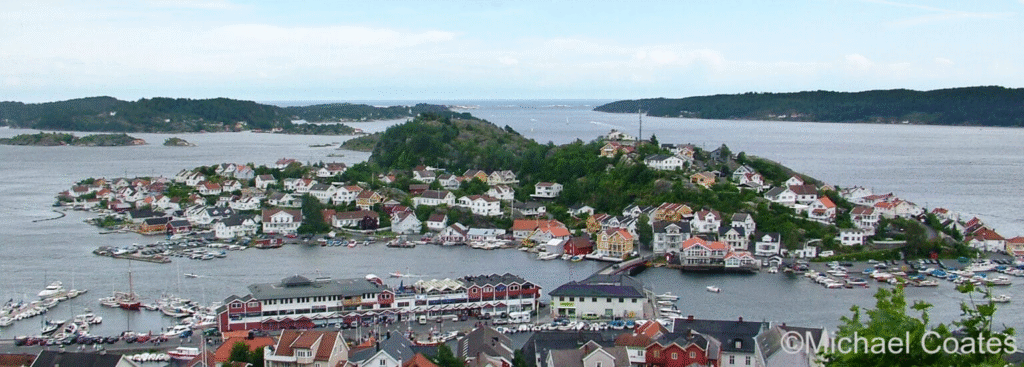
East of Lindesnes, Norway’s southernmost point, the scenery is one of soft rounded hills covered with deciduous forest. The coast is protected by off-lying islands and almost the entire coast can be navigated inside the skjærgård (off-lying skerries).

There is quite a lot of sunshine here as the westerlies, which bring most of the bad weather to the west coast ion summer, are broken up by the mountain barrier and, incidentally, emptied of their rain at the same time.
The solgangsbris (afternoon sea breeze) can blow quite strongly from the southwest, so on a passage southwards from Oslofjorden you will want to get off to an early start, taking advantage f the weak offshore breeze that is common at night and in the early hours of the morning.
Harbours and anchorages may be crowded, but, on the other hand, there are more facilities geared to pleasure boats.
Almost half of Norway’s 5.5 million people live in this area
West of Lindesnes the scenery changes slowly, from the gentle skjærgård to the bleak mountains and exposed coast south of Egersund – an appetiser for the dramatic west-coast scenery that is waiting around the corner.
Once north of Egersund, the coastline again flattens out, but there is no protection from the sea until you enter the skerries again at Tananger.
Tananger to Lofoten (Volumes 2,3, and 4)
The scenery in this area is grand, rugged and awe-inspiring. There are huge fjords, which run for up to 115nm in land, with inhospitable shores, incredible depth of water and almost vertical cliff walls rising 1,000m or more from the surface of the water. All this can cause squalls and unpredictable winds.

Here the skjærgård priovides miles of protected waters but not necessarily good sailing breezes. Surprisingly, there may be less wind the further north you go, as the south is more on the main track for summer depressions.
Though this area is much less populated than southern Norway, there are still a number of small coastal cities and hundreds of tiny village harbours. The coast between Trondheim and Lofoten has become a popular destination for cruising sailors, but outside the larger centres you may still find yourself the only visiting boat in many places.
Lofoten to the Russian Border (Volume 4)

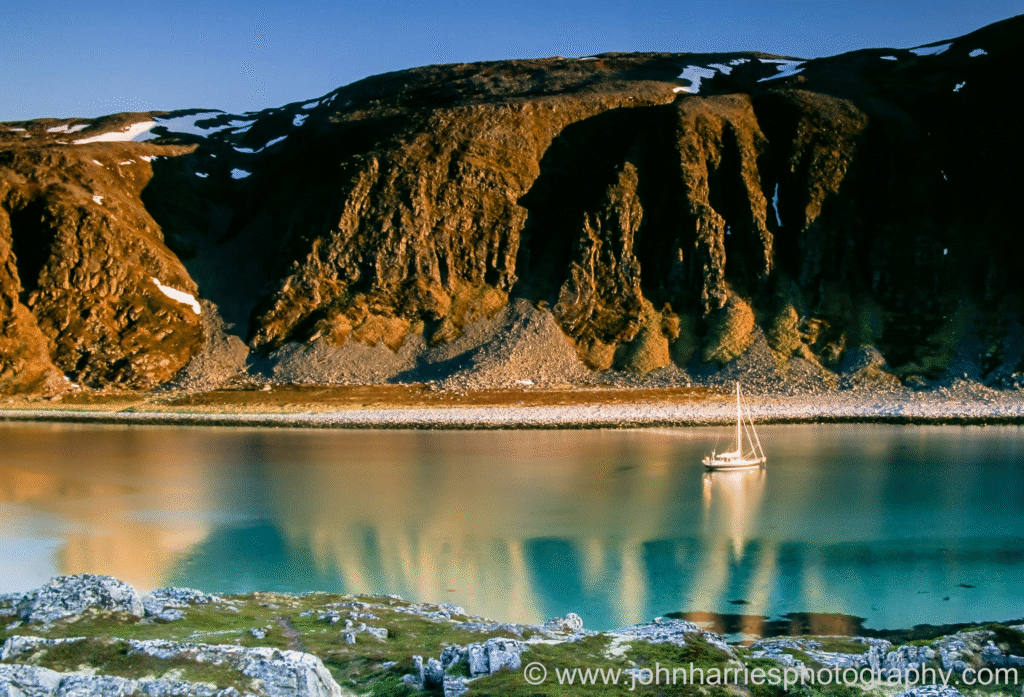
The land is lower here than on the west coast but still indented with deep fjords. Most of the coast west of Nordkapp has off-lying islands, though there are gaps in this protection.
Once east of Nordkapp, you are exposed to the Barents Sea, with only a few sheltered harbours. People are thin on the ground but the warm welcome you will receive as a visiting boat – an unusual event – will more than make up for any inconvenience or discomfort.
At the Russian border you are as far north as parts of Greenland and further east than Istanbul. That’s out there!
Sample Itineraries
To cruise the whole coast of Norway in-depth would take a lifetime, and few of us have that luxury, other than Norwegian sailors. However, leaving your boat in Norway over one or more winters and returning to cruise in the summers is one way to get more exposure to this incredible and varied coast (make sure to research Customs and Immigration regulations prior to your voyage).
Sailing Distances Between Principal Ports
Cruise #1 (Volumes 2 and 3)
In order to experience some of the grandeur of the west coast as well as the good sailing of the south coast est of Lindesnes, we suggest the following:
- Landfall in Tananger or Skudeneshavn.
- Sail north to Bergen.
- If you are interested in hiking, spend some time in Sognefjorden.
- Sail south to Stavanger and, if you didn’t have time to visit Sognefjorden, explore Lysefjorden. This is one of the most beautiful and spectacular fjords in Norway with the great advantage of being only just over 20nm long.
- Sail south around Lindesnes and then to Oslofjorden.
Cruise #2 (Volumes 3 and 4)
If you want to focus on the west coast and Lofoten, we suggest the following itinerary:
- Landfall in Ålesund.
- Sail north through the skjærgård.
- Sail to an offshore island near the Arctic Circle, e.g. Myken or Træna.
- Sail directly to Røst in Lofoten.
- Circumnavigate Vestfjorden clockwise.
- Explore Tysfjorden.
- Return south along the mainland coast with a stop in Trondheim.
Cruise #3 (Volume 4)
If you are fortunate enough to return for another season, or have enough time to continue on north of Lofoten, we suggest the following:
- Explore Vesterålen (the island group north of Lofoten).
- Continue north outside Senja and Kvaløya.
- Sail to Tromsø and on to Honningsvåg, outside Sørøya if weather permits.
- Continue on to Kirkenes.
- Anchor in Lille Sandbukt if you wish to get that close to the Russian border…
- Return south to Tromsø inside Sørøya, spending some time hiking in Lyngen.
- Sail inshore via Finnsnes and Harstad and through Tjeldsundet to Vestfjorden.